Art of War 3:RTS strategy game
- 4.7
- Rating
- 10.00M
- Installs
- Free
- Price
 Analysis by App-foxy
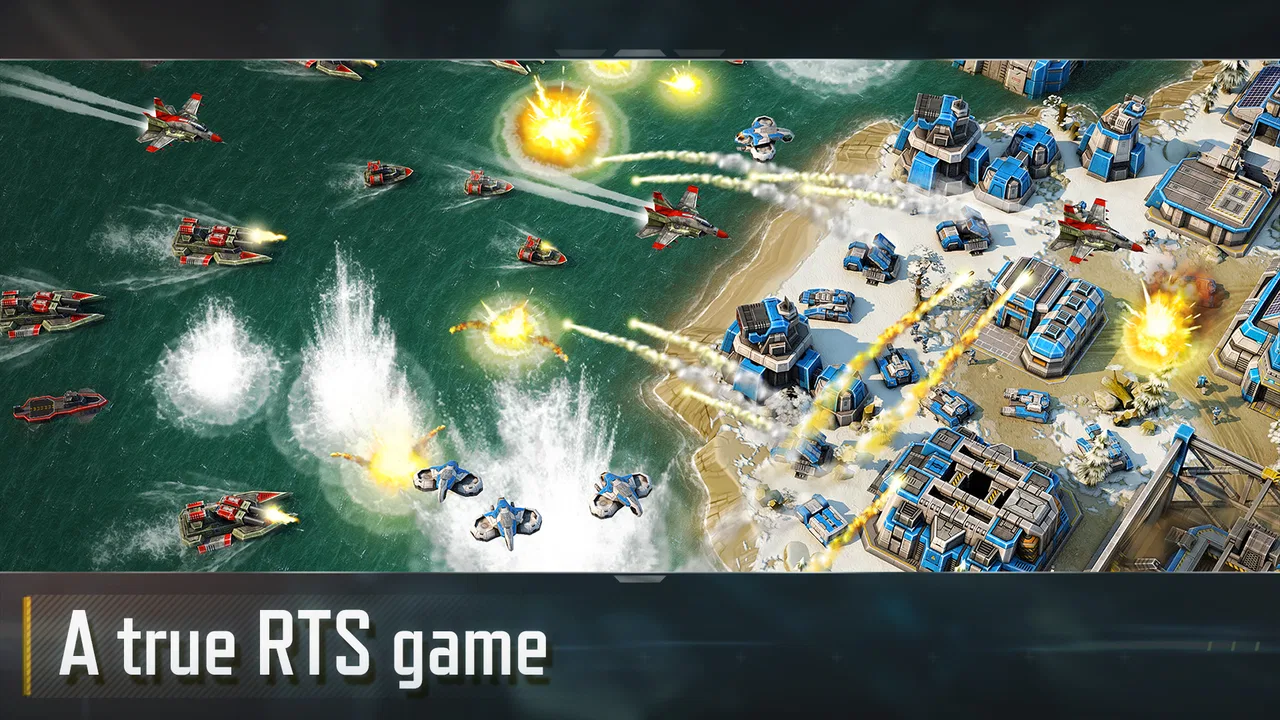
I went into Art of War 3 expecting a familiar mobile strategy game, but its appeal became clear as soon as I had to make decisions under pressure rather than simply wait for a timer. This is a real-time strategy game from Gear Games Global, built around creating a base, producing forces, choosing a plan and fighting other players online. The important difference is that the action keeps asking me to react. I am not only arranging upgrades or collecting resources; I am constantly deciding what deserves attention next.
That makes it a much better fit for someone who enjoys short bursts of tactical thinking than for a player looking for a relaxed city builder. The game is free to start, carries a Teen content rating, and has reached over ten million installs. Its average rating sits at 4.6 from roughly 466 thousand ratings, which matches my impression that it has found a substantial audience without being a completely effortless experience.
Why the opening move matters more than it seems
The first useful lesson is that a match begins before the fighting feels serious. I have to think about where my base is heading, what kind of force I want to support and how quickly I can turn an early advantage into pressure. Building everything at once is tempting, but that usually creates a scattered plan. A stronger opening comes from choosing a purpose: defend efficiently, expand the attack, or prepare for a specific confrontation.
You May Also Like

 Blood Strike: 2.5 Anniversary
Blood Strike’s Loadouts Turn Every Drop Into a Tactical Gamble
A close look at Blood Strike’s custom loadouts: how fast access to signature weapons reshapes its battle royale rhythm, rewards preparation, and narrows the gap between fights.

 Pandora - Music & Podcasts
Pandora’s Music Is Easy to Start, but Harder to Recover
Pandora’s strength is its low-effort path from a seed to a station. Its weak spot is how much confidence it asks you to place in connection, setup, and quiet recovery.

 8 Ball Pool
 Is Built on Rivalries, Rematches, and Routine
A close look at the rivalries, rematches, shared routines, and unanswered safety questions that turn a quick pool match into a persistent mobile community.

 Samsung Music
’s Quiet Strength Is Playing What You Already Own
Its reach comes less from spectacle than from dependable access to a personal library. That simplicity is both the app’s strongest retention engine and its ceiling.

 AccuWeather: Weather Radar
AccuWeather Review: A Quick, Clear Forecast for Everyday Decisions
For everyday plans, the best forecast is the one you can understand quickly. AccuWeather makes rain timing, radar, and local conditions easy to act on, with a few trade-offs.

 Hill Climb Racing
Why Hill Climb Racing Still Turns Crashes Into One More Run
A tiny car, a bumpy hill and one more upgrade: Hill Climb Racing keeps resurfacing because its simple chaos makes every near-miss feel personal.
More From Our News Desk



This is where the game feels different from many mobile strategy alternatives. In a typical base-building title, a poor early choice can often be repaired by waiting. Here, an inefficient opening can affect the whole battle because production, movement and defense compete for my attention. The first action therefore has a direct consequence. If I spend too long preparing, an opponent may gain room. If I attack before my position is ready, I may lose the initiative and have to rebuild under pressure.
I found it useful to treat the opening as a question rather than a checklist: what does this battlefield require from me right now? That mindset prevents the common mistake of following the same build every time. A familiar opening can be comfortable, but a real-time opponent can punish predictable behavior. Even when the game gives me a broad strategic direction, I still need to adjust it to what is happening in front of me.
The most valuable early habit is to make one clear commitment, then watch whether the battle rewards it. If my first investment creates useful pressure, I can continue. If it leaves the base exposed or delays the force I actually need, I should change course instead of stubbornly repeating the plan.
Turning a base into a working machine
Base construction is more interesting when I stop viewing buildings as isolated buttons. Each choice changes the timing of the next choice. A defensive decision may buy time but reduce immediate pressure. A production-focused decision may help me attack sooner but make a mistake more expensive. The game becomes readable when I connect those decisions to battlefield goals rather than building simply because an option is available.
That also explains why the game can feel demanding on a phone. The screen gives me less room than a desktop real-time strategy game, so I need to issue purposeful commands. I cannot afford to inspect every detail endlessly while the opponent is acting. I learned to check the base, check the active force and then return to the most urgent problem. This simple rotation is more effective than staring at one area while another part of the battle develops.
For a new player, I would recommend learning one dependable approach before trying to understand every possibility. The goal is not to discover a perfect formula. It is to recognize what a healthy start feels like: the base is doing useful work, the army has a reason to exist and I know what I want the opponent to worry about. Once that rhythm becomes familiar, experimenting becomes less confusing.
Every decision creates a feedback rhythm
The core loop is action, feedback, reward, reset and renewed action. I build or reposition something, see how the opponent responds, gain ground or lose it, then begin the next session with a revised idea. That rhythm is what keeps the game moving. A successful attack is satisfying because it confirms a decision. A failed push can still be useful if it shows me that my timing, positioning or preparation was wrong.
Feedback arrives through the state of the battlefield rather than through a single dramatic result. A force that reaches the right place at the right time can open an opportunity. A delayed response can let that opportunity disappear. When I notice those links, the game stops feeling random. I can identify the moment when a plan worked, the moment when it became too ambitious and the moment when I should have protected the base instead of chasing a target.
This is one of the strongest parts of the experience for strategy fans. The game gives me reasons to review my own decisions. I might have had enough strength but used it in the wrong direction. I might have defended successfully but failed to turn that defense into a counterattack. I might have focused on a visible threat while ignoring the larger objective. Those distinctions make a loss more informative than a simple “try again” screen.
At the same time, the feedback can feel harsh when several problems arrive together. A small mistake may force me to divide attention between the base and the front line, and a second mistake can make recovery difficult. Players who prefer games with generous correction windows may find this frustrating. The tension is part of the appeal, but it also means that the game asks for more concentration than its mobile format initially suggests.
How I read a match without getting overwhelmed
I try to ask three practical questions during a battle. What is currently threatening my base? What is my strongest active opportunity? Which action will still matter a short time from now? These questions keep me from reacting to every movement equally. They are especially useful when several forces are visible and the temptation is to tap quickly instead of thinking clearly.
Another helpful approach is to separate urgent decisions from important decisions. A defensive response may be urgent, while a longer-term production choice is important. If I confuse the two, I can spend too much time planning while something immediate goes wrong. Once the danger is contained, I return to the larger plan and decide whether the match is still moving in my favor.
This method also makes the game more approachable for people who are new to real-time strategy. I do not need to understand every interaction immediately. I need to notice cause and effect. When a unit or structure produces the result I wanted, I remember the situation. When it fails, I ask whether the problem was timing, position or the wider plan. That process is more useful than memorizing isolated tips.
Rewards feel best when they confirm improvement
The most satisfying reward is not simply winning. It is seeing a decision produce a result I can explain. If I protect a vulnerable area, create pressure elsewhere and force the opponent to respond, the match feels like a conversation that I managed well. That sense of control is more meaningful than a reward that arrives without a clear connection to my play.
There is also a natural reward in becoming faster at recognizing situations. During my first sessions, I spent too much time deciding what deserved attention. Later, I began to notice patterns earlier: an exposed position, an overextended attack or a moment when defense could become momentum. The game rewards familiarity because knowledge reduces hesitation, and reduced hesitation gives me more time to act.
That progression is important for understanding the audience. Someone who enjoys learning through repeated matches will probably find the system motivating. Someone who wants immediate mastery may feel that the game withholds its best experience until they have made several mistakes. I would not call that a flaw by itself, but it does make the early hours more demanding than a casual strategy title.
There is a financial consideration as well. The game is free, but in-app purchases range from $0.99 to $399.99 per item. I would approach those purchases carefully and decide in advance whether I want to spend anything. The presence of a wide purchase range means the game is not best treated as a completely cost-free hobby by default. Players who strongly prefer a fixed-price experience should consider a premium strategy game instead, even if it offers less direct competition.
For me, the right way to judge the purchase element is to ask whether I am enjoying the tactical loop before spending. If the battles are already interesting, I can decide whether optional spending adds value for my own habits. If I am bored with the decisions themselves, spending will not solve that problem. The central attraction has to come from commanding, adapting and learning, not from accelerating the experience.
A practical use case for short sessions
Imagine having a free part of an evening after work or school. I can start a session with one intention, such as practicing a more defensive opening or improving how I respond to early pressure. The match then gives me a clear test. Did I protect the base without becoming passive? Did I create an attack before the opponent became comfortable? Did I recognize when the original plan had stopped working?
That makes the game useful as a focused mental break. It is not passive entertainment, because even a short session requires attention. I would not recommend starting a match while distracted or expecting to pause my thinking every few seconds. The better scenario is a deliberate block of time in which I am ready to make decisions and accept that the result may be a loss.
A useful personal rule is to finish a session by identifying one decision I would repeat and one I would change. This keeps the reset productive. Instead of carrying only the emotion of a defeat, I carry a specific adjustment into the next match. That is where the reward loop becomes stronger: the previous battle changes how I approach the next one.
Resetting after a win or a bad loss
The reset is not merely the point where one match ends. It is the moment when I decide what the previous result means. A win can encourage overconfidence, especially if the opponent allowed me too much room. A loss can make me abandon a good idea that only needed better timing. The healthiest reset is analytical but brief: identify the turning point, make one adjustment and play again only if I still want to think clearly.
This matters because the game can create a strong urge to immediately recover a defeat. That urge is understandable, but it is not always helpful. If I begin another match while annoyed, I tend to rush the opening and repeat the same mistake. Taking a short break is a genuine strategy, not a sign that the game has failed to entertain me. Real-time competition rewards a calm mind more than emotional persistence.
The reset also exposes one of the game’s limitations. Players who want a predictable, low-pressure progression may dislike having their attention pulled back into tactical decisions each time. A conventional builder can be more comfortable when the main pleasure comes from gradual improvement of a personal space. Here, the battlefield keeps asking for judgment, and that demand does not disappear simply because I have played several matches.
I would also skip it if my main goal is a story-led campaign with a carefully paced narrative. The appeal here is strategic interaction and the challenge of responding to another player, not a relaxing sequence of scripted scenes. Likewise, players who dislike online competition or who prefer to win through collection and long-term accumulation may find the match-based structure less satisfying than other mobile strategy games.
How it compares with familiar alternatives
Compared with base-building games that revolve around timers and upgrades, Art of War 3 feels more immediate. My decisions matter during the battle, not only between battles. Compared with traditional desktop real-time strategy games, it is easier to pick up on a mobile device, but the smaller interface can make multitasking less comfortable. That trade-off is central: I gain accessibility and portability, while giving up some of the spacious control that a larger screen provides.
Compared with turn-based strategy, the game offers less time to calculate every possibility. That makes it more exciting, but also less forgiving. A turn-based alternative is better if I enjoy deep planning without a clock pressing on each decision. On the other hand, if I want the satisfaction of seeing a plan collide with an opponent’s response immediately, this game has a stronger pull.
It also differs from purely casual competitive games because the reward is tied to understanding the whole situation. Quick reactions help, but they cannot replace a sensible base plan. I may win a small confrontation and still lose the match if I fail to protect the wider position. That larger connection between local action and overall strategy is one of the reasons I kept returning.
Who should install it, and who should pass?
I recommend it to players who enjoy real-time strategy, online competition and learning from repeated attempts. It is particularly suitable for someone who likes turning a vague situation into a clear plan, then adjusting that plan when an opponent interferes. The Teen rating is worth keeping in mind for families choosing games, and the minimum requirement of Android 6.0 makes it accessible to devices that are not especially new.
I would be more cautious about recommending it to someone who wants a quiet, interruption-friendly game. The action can punish divided attention, and the satisfaction comes from staying mentally present. I would also steer away players who dislike free-to-play economies, even though the initial download costs nothing. The broad in-app purchase range means anyone sensitive to spending pressure should set firm limits before playing.
New players should not judge the game after one confusing match. The early challenge is learning what deserves attention and how quickly a harmless-looking situation can change. I would start by focusing on a simple battle objective, watching the response and reviewing the turning point afterward. That approach is more effective than trying to learn every strategic detail at once.
Experienced strategy players should come in with an open mind rather than assuming that desktop habits transfer perfectly to a phone. The principles of timing, economy and positioning still matter, but the interface encourages concise commands and frequent checks. A plan that is elegant on a large screen may be awkward when every extra action costs attention.
My verdict after following the full loop
Art of War 3 works because its matches create a clear reason to continue. I take an action, receive a visible response, earn the satisfaction of a successful decision or the lesson of a failed one, reset my approach and begin again with a better question. That loop is more compelling than the simple promise of building a base. The base matters because it supports the decisions I make under pressure.
Its weaknesses are equally clear. The game can be demanding on a small screen, losses may feel difficult to recover from and the free-to-play structure deserves careful spending choices. It is not the right alternative for a relaxed builder, a story-focused player or someone who wants a fixed-price experience without competitive pressure.
Still, I found the strategic feedback unusually worthwhile for a mobile game. When I finish a match, I usually know whether I acted too slowly, committed too early or failed to turn an advantage into control. That clarity gives the next session a purpose. Art of War 3 is at its best when you want every match to teach you something and every reset to feel like a fresh tactical experiment.
The current version is 6.5.22, and the game was released on May 22, 2018. Those details matter less to me than the experience it delivers today: a free strategy game with a substantial player base, a 4.6 average and enough tactical pressure to reward attention. If that action-feedback-reset rhythm sounds appealing, I think it is worth trying. If you want strategy without urgency, I would choose a calmer alternative instead.
FAQs for Art of War 3:RTS strategy game
01What is the core gameplay of Art of War 3: RTS strategy game?
Art of War 3 is a real-time strategy game that focuses on tactical battles where you command an army in epic head-to-head combat. Players must build their base, manage resources, and lead their forces to victory. The game emphasizes strategic planning and quick decision-making to outmaneuver opponents.
02Is Art of War 3 free to play, or does it require in-app purchases?
Art of War 3 is free to download and play; however, it includes in-app purchases. Players can buy various items to enhance gameplay, such as special units, upgrades, and resources. While these purchases can speed up progress, they are optional, and players can still enjoy the game without spending money.
03Does Art of War 3 require an internet connection to play?
Yes, Art of War 3 requires a stable internet connection to play. As a real-time strategy game with multiplayer features, it relies on online connectivity for battles against other players and for syncing progress across devices. A reliable connection ensures smooth and responsive gameplay.
04What are the system requirements for Art of War 3 on mobile devices?
Art of War 3 is available on both Android and iOS platforms. For Android, it typically requires version 4.1 or higher, while iOS devices need iOS 9.0 or later. The game is optimized for a range of devices, but higher-end models may offer better graphics and performance.
05Can I play Art of War 3 with friends, and is there a multiplayer mode?
Yes, Art of War 3 features a robust multiplayer mode where you can compete against friends or other players worldwide. You can join clans, participate in tournaments, and engage in cooperative missions. The multiplayer aspect adds depth and replayability, making it a social gaming experience.
Pros
- Real-time combat enhances strategic depth.
- Diverse units and factions for varied gameplay.
- Regular updates keep the game fresh.
- Global PvP matches boost competitiveness.
- Offline missions available for practice.
Cons
- Requires stable internet for optimal play.
- In-app purchases can be quite expensive.
- Steep learning curve for new players.
- Battery drain on older devices is high.
- Long loading times can be frustrating.

Art of War 3:RTS strategy game
Gallery